
Launching Like the Best: What I Learned About Product Launches at ESET

Anja Dimitrijevic
Founder & Managing Partner
Product launches are my favorite topic. I could write a whole book on them, but in this post I want to focus on the launch process and what I learned from the best.
The context
At ESET, a cybersecurity firm, I watched masters of product launch and project management at work. ESET is a mid-size company with three segments: consumer, mid-market, and enterprise. As a Product Marketing Manager (PMM), I mostly worked on mid-market and enterprise launches. Consumer and self-serve were handled by ESET's digital team of performance marketers.
Launches were tiered. Tier 2 launches happened roughly quarterly (for example, a new product like cybersecurity awareness training for corporations). Tier 1 launches happened about once a year (for example, a completely new version 3.0 of the antivirus).
ESET's product is highly technical, and many teams were involved. For tier 1 and tier 2 launches, that meant field sales, engineering sales, enterprise sales, mid-market sales, customer support, professional services, business systems, knowledge base, campaigns, partner marketing, digital marketing, and account marketing.
With that context set, here's the process. It works for companies of any size.
Step 1: Agile Scrum, for every team
We used Agile Scrum. Yes, agile isn't just for software developers.
I'll skip the early work with product management (defining the customer, the pain point, and what we're solving for), since that was settled before the launch plan began. From there, I partnered with a Scrum Master.
So what's a Scrum Master? Think of them as the project manager and facilitator for the launch. They don't do the work themselves. They break the launch into tasks, get the right people committed, run the sprint meetings, track progress on the board, and clear blockers so the team keeps moving. At ESET, I owned the what and why of the launch (audience, messaging, strategy) and the Scrum Master owned the how and when.
ESET had two Scrum Masters, and I was assigned one of them, which made my life so much easier. If you don't have one (and many organizations don't), this role usually falls to the product marketing manager.
Step 2: A repeatable GTM playbook
The Scrum Master and I started by outlining everything the launch needed and what we were trying to accomplish. Luckily, we had a repeatable GTM playbook with defined tiers (a topic for another post), so we never started from scratch.
Tier 1 and tier 2 are heavy launches and need at least 3 to 4 months of lead time. The work includes internal docs and training, website updates (new landing pages), partner portal updates, promotions to new and existing customers, promo videos, tutorials, and PR. Each launch is unique, but with 4 to 5 tiers, each with its own guide, we could go to market faster.
The launch template was organized by category:
Internal training: product docs and team education
Website: usually the most time-consuming, because it needs the most assets
Partner marketing: ESET is a big partner company
Campaigns: the promotion side
We went through the list and marked what we needed and what we didn't. Campaigns were the most complex and the most creative. We knew our customer and which channels to use, but the real question was strategy. Is there a conference we can launch at? What's the current environment? For example, when we launched a new ransomware product, the timing was perfect because ransomware attacks were at an all-time high.
Step 3: Break it into chunks and assign owners
Once we'd identified everything that needed to be done, we found task owners. Breaking the work into chunks dramatically reduces complexity.
The Scrum Master would go to each potential owner's manager (all teams had quarterly OKRs) and say, "We're working on this launch and we need Tim's expertise. We expect it'll take about 2 hours of his time per week. Can he commit to that?"
We also assigned an executive stakeholder: someone from the exec team who isn't a task owner but is there if the team needs something from leadership or can't reach a decision.
Step 4: Kick off and run sprints
With the task list done, owners approved by their managers, and an exec stakeholder in place, we moved to execution.
Kickoff. All task owners were invited. I explained what the launch was about, who the audience was, and what we were solving for. Then the Scrum Master walked through the plan and execution.
Sprints. We worked in two-week sprints, with priorities set together with the Scrum Master. Thanks to the playbook, the order was usually predictable: product marketing docs first (messaging, positioning, product release), then internal enablement so teams knew how to sell and market it, then the website, and so on.
Sprint meetings happened every other Tuesday, and only owners with tasks in those two weeks attended. If your partner marketing tasks are weeks away, you don't need to be in the early sprints.
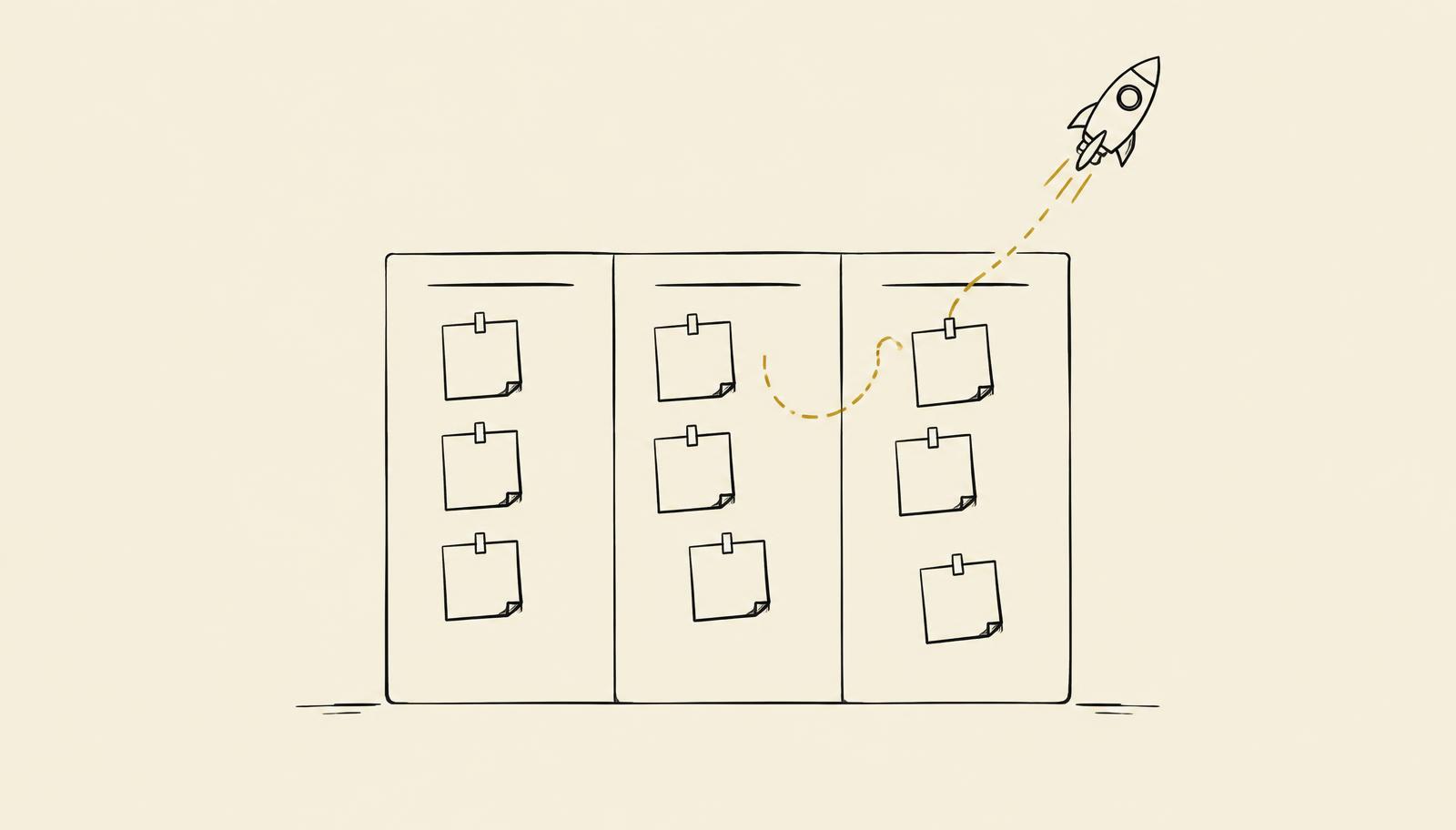
Each meeting ran 30 minutes or less. The Scrum Master presented the Kanban board in Jira and read through the tasks. Owners gave updates and flagged blockers or needs for more time. Anything that needed more time rolled into the next sprint.
The takeaway
So, in a nutshell, that's it. A repeatable GTM playbook, defined tiers, and someone running the process (a Scrum Master, or you) turn a complex launch into manageable chunks, and every team knows what's happening.
This copies to smaller organizations too, and I highly recommend trying it. One caveat: the whole team needs to be on board. That means backing from the executives and department heads, because it's difficult to change the way people operate. Every company launches differently, but I'd especially use this process for tier 1 and tier 2 launches: the bigger, more complex, revenue-driving ones.
And finally, I had the privilege of learning from the best. In essence, a product launch is an art in itself. It's about the strategy, it's about the project management, and what I love the most is watching a team come together.
Cheers, and happy launching!
Templates
Usually, you'll manage all of this in a project management tool. But to help you get started, here are simplified templates with the above approach — free, no email required. Pick your format: